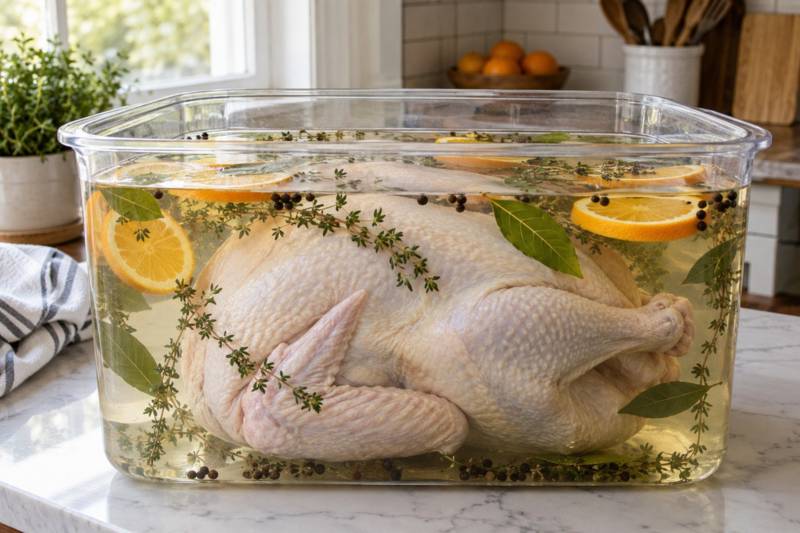
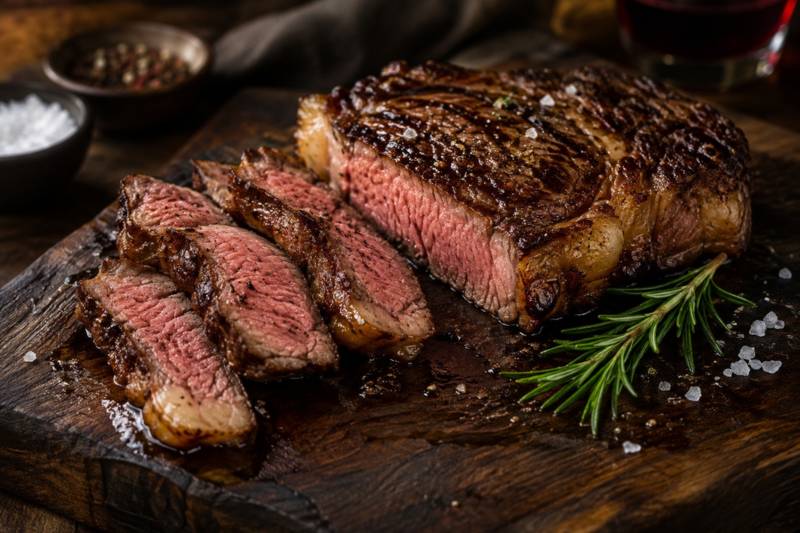
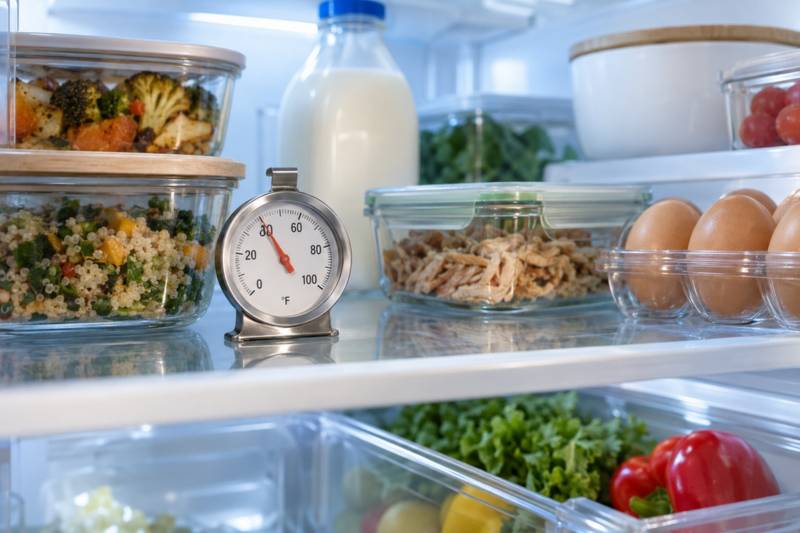
To use a meat thermometer, push the tip into the thickest part of the food, away from bone, fat and gristle, and wait for the reading to settle. Check near the end of cooking and compare the number with the USDA safe minimum: 145°F for whole cuts, 160°F for ground meat, 165°F for poultry.
Key facts
- USDA FSIS times digital thermocouple thermometers at 2–5 seconds and dial instant-read models at 15–20 seconds.
- Check a whole turkey or chicken in three places: the innermost thigh, the innermost wing and the thickest part of the breast.
- For burgers and other thin foods, slide the thermometer in from the side so the tip reaches the center.
- Calibrated correctly, a thermometer reads 32°F in ice water and 212°F in boiling water at sea level.
- A pop-up timer is accurate to within 1–2°F, but FSIS still recommends confirming with a regular food thermometer.
Why use a meat thermometer at all?
Color and texture can't tell you whether meat is safe. USDA notes that a burger can turn brown before it reaches a safe temperature, and fully cooked chicken can stay pink near the bone. A food thermometer is the only way to know the center of the meat has reached a temperature that kills harmful bacteria.
It also helps with doneness. Pull a steak at the right moment and it ends up the way you like it, not gray and dry. Our cooking temperatures hub lists the USDA number for each food, and the chart below covers the most common ones.
| Food | USDA minimum | °C | Rest |
|---|---|---|---|
| Steak (beef) | 145°F | 63°C | 3 min |
| Ground beef & burgers | 160°F | 71°C | — |
| Chicken breast | 165°F | 74°C | — |
| Turkey (whole & breast) | 165°F | 74°C | — |
| Pork chops | 145°F | 63°C | 3 min |
| Ground pork & fresh sausage | 160°F | 71°C | — |
| Ham (fresh vs fully cooked reheating) | 145°F | 63°C | 3 min |
| Lamb chops & leg | 145°F | 63°C | 3 min |
| Salmon | 145°F | 63°C | — |
| Shrimp & shellfish | 145°F | 63°C | — |
| Eggs & egg dishes | 160°F | 71°C | — |
| Casseroles & leftovers (reheating) | 165°F | 74°C | — |
Types of meat thermometers
USDA FSIS sorts kitchen thermometers by how they work, how fast they read and how deep the tip has to go. The depth matters: the sensor sits near the tip of a digital model but runs up the stem of a dial model, so a dial thermometer needs a thicker piece of food to read correctly.
| Type | Reading time | Insert at least | Best for |
|---|---|---|---|
| Instant-read digital (thermocouple) | 2–5 seconds | 1/4 inch | Thick or thin foods; quick spot checks |
| Instant-read digital (thermistor) | About 10 seconds | 1/2 inch | Most foods, including thin cuts |
| Dial instant-read | 15–20 seconds | 2–2½ inches | Roasts and thick cuts, checked near the end |
| Dial oven-safe | 1–2 minutes | 2–2½ inches | Roasts; stays in the meat while it cooks |
| Probe with cord (leave-in) | About 10 seconds | 1/2 inch | Oven or covered-pot cooking, read outside the oven |
| Wireless leave-in probe | Continuous | 1 inch | Long roasts and smoking, read on a phone |
| Pop-up timer | Pops at a set temperature | Factory-placed | A backup signal only; confirm with a thermometer |
Instant-read digital thermometers
An instant-read thermometer is the most flexible choice for home cooks. Because the sensor is in the tip, it reads thin pork chops, salmon fillets and burgers as well as roasts. Check near the end of cooking and take it out once you have your number.
Dial oven-safe thermometers
These go into a roast at the start and stay there. FSIS warns that the metal stem can conduct heat and push the reading a little high, and they aren't suited to thin foods. Confirm with an instant-read before you call a roast done.
Probe and leave-in thermometers
A probe on a heat-safe cord, or a wireless probe, lets you watch the temperature climb without opening the oven or smoker. FSIS notes that corded oven probes can't be calibrated, so test them against a thermometer you can check.
Pop-up timers
The plastic button in some turkeys pops at a set temperature. FSIS says they are reliable to within 1–2°F when placed correctly, but they measure only one spot. Check the thigh, wing and breast with a regular food thermometer as well.
Where to put a meat thermometer
The rule for every food is the same: aim the tip at the thickest part, the spot that heats last, and keep it off bone, fat and gristle. Bone conducts heat and fat heats differently, so either one can give a false reading. On large or uneven pieces, check more than one spot.
Steaks, chops and roasts
Insert the thermometer into the thickest part of a steak or pork chop, away from bone. On a thinner cut, go in through the side so the tip sits in the middle. For a roast, place the tip midway into the thickest area and check a few places. Whole cuts of beef, pork, veal and lamb need 145°F plus a 3-minute rest; our guide to carryover cooking and resting meat explains when to pull them.
Chicken pieces
Probe the thickest part of a chicken breast, thigh or drumstick without touching bone. For thin cutlets, insert from the side. All poultry is safe at 165°F.
Whole turkey or chicken
FSIS asks for three readings on a whole bird, avoiding bone each time: the innermost part of the thigh, the innermost part of the wing and the thickest part of the breast. Every spot should read at least 165°F. If the bird is stuffed, the center of the stuffing also has to reach 165°F. See our turkey temperature page for more.
Burgers and other thin foods
Pushing a thermometer straight down into a burger puts the tip too close to the pan. Instead, slide it in through the side of the patty so the sensing area reaches the center. Ground beef needs 160°F. The same side-entry trick works for thin fish fillets, sausages and cutlets.
Meatloaf, fish and casseroles
Check the center of a meatloaf (160°F) and the thickest part of a fish fillet such as salmon (145°F). For egg dishes and casseroles, FSIS suggests checking the center in several places.
How to calibrate a meat thermometer
A thermometer that reads a few degrees off can leave chicken undercooked or a steak overdone. North Dakota State University Extension recommends checking calibration at least once a month and any time the thermometer is dropped. Dial thermometers usually have a calibration nut, and some digital models can be reset; check the manual for yours.
Ice water method
- Fill a tall glass with ice, add cold drinking water and stir.
- Put the stem at least 2 inches into the ice water without touching the sides or bottom.
- Wait at least 30 seconds. The thermometer should read 32°F.
- If it doesn't, adjust it with the calibration nut or reset feature while it stays in the water.
Boiling water method
- Bring clean water to a full boil. FSIS suggests distilled water for the best accuracy.
- Put the stem at least 2 inches into the water, clear of the sides and bottom.
- Wait at least 30 seconds. At sea level it should read 212°F.
Water boils at a lower temperature at altitude. NDSU Extension lowers the target by about 1°F for every 550 feet above sea level, and it suggests the ice water method for cooks at high elevation. If a thermometer can't be adjusted and reads wrong, replace it. Need the numbers in Celsius? Use our temperature converter.
How to clean a meat thermometer
A probe that goes into raw meat and then into finished food can carry bacteria with it. Clean it before, between and after uses:
- Wash the stem in hot, soapy water and rinse with clean hot water.
- To sanitize, NDSU Extension uses 1 tablespoon of chlorine bleach per gallon of clean, lukewarm water (at least 75°F).
- Let it air-dry.
Questions people ask
How do you use a meat thermometer on a turkey breast?
Insert the tip into the thickest part of the breast, keeping it off the bone. On a whole bird, also check the innermost thigh and wing; every spot should read 165°F.
How long do you leave a meat thermometer in the meat?
An instant-read digital model needs only seconds; FSIS times thermocouples at 2–5 seconds and dial instant-reads at 15–20 seconds. Oven-safe dial and leave-in probe thermometers can stay in for the whole cook.
Can you leave an instant-read thermometer in the oven?
No. FSIS describes instant-read models as tools for checking near the end of cooking, and NDSU Extension warns against leaving thermometers with plastic lens covers in food while it cooks. Use an oven-safe dial thermometer or a leave-in probe if you want to monitor a roast while it cooks.
Where do you put a meat thermometer in pork chops?
Into the thickest part, away from bone. On a thin chop, go in through the side so the tip sits in the center, and look for 145°F followed by a 3-minute rest.
Are pop-up turkey timers accurate?
FSIS says they're reliable to within 1–2°F, but they read only one spot. Confirm with a food thermometer in the thigh, wing and breast.
How do I know if my food thermometer is accurate?
Put the stem 2 inches into a glass of ice water for 30 seconds. It should read 32°F; if not, recalibrate it or replace it.